


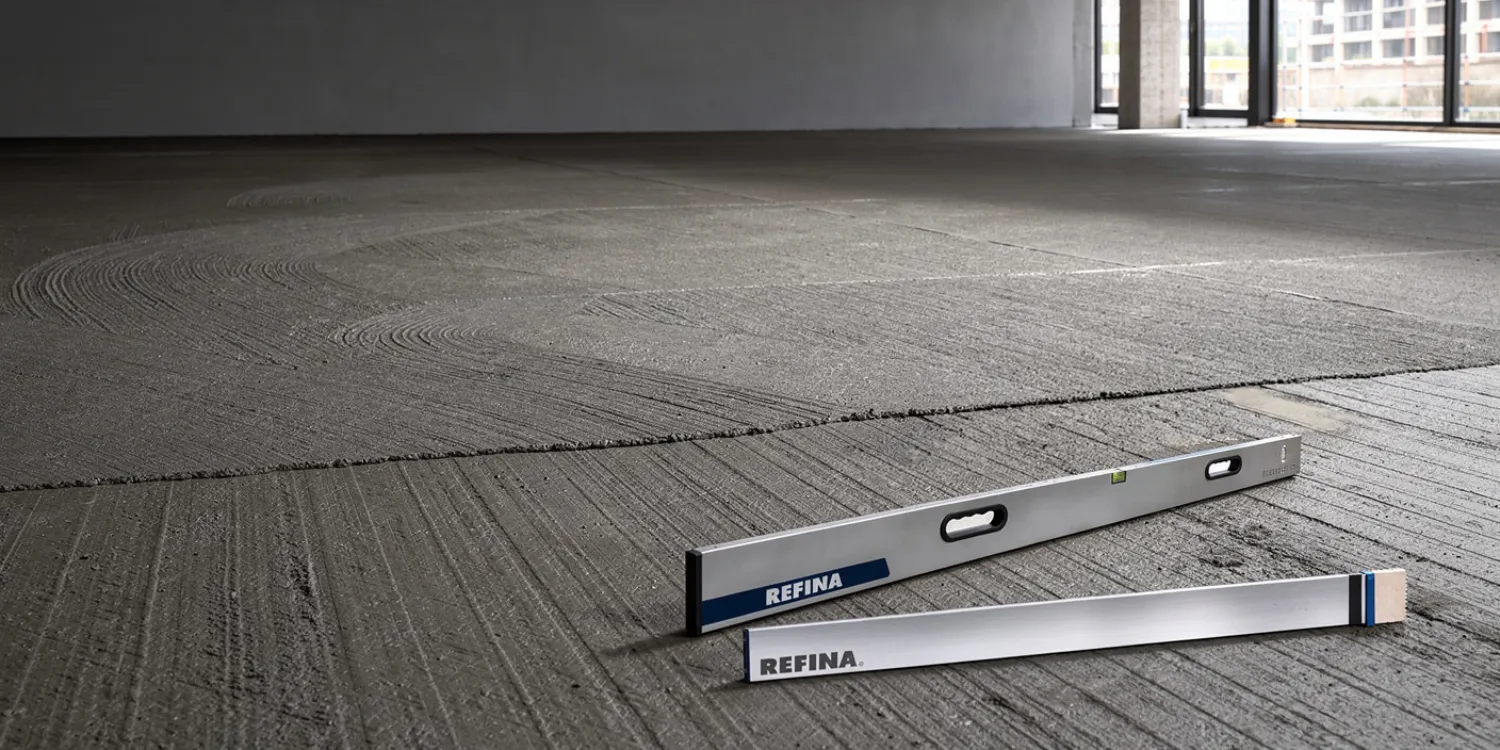
A straight edge is one of the simplest tools used in floor screeding, plastering and rendering, but it has an important job. It helps identify high and low spots, remove excess material and produce a flatter, more consistent surface.
For floor work, a heavy-duty aluminium straight edge can also be described as a screed rule or box rule. The tool is drawn across freshly placed material to rule it off between guides or established datum points.
Although powered screeding equipment is available for large concrete pours, a manual straight edge is a different tool with a much broader range of uses.
What Is a Heavy Duty Straight Edge?
A heavy-duty straight edge is a long, rigid section manufactured to provide a consistently straight working edge. Aluminium is widely used because it combines strength and rigidity with a manageable weight and resistance to corrosion.
Box-section straight edges have a rectangular hollow profile. The shape helps the rule resist flexing while remaining lighter than a solid metal bar. This makes it suitable for repeated use across floors, walls, plaster, render and other construction materials.
The REFINA heavy-duty box section has an 80 x 40mm profile and is available from ScreedGiant in lengths from 1m to 3m. It is intended for levelling, ruling off and identifying high and low areas on floors and walls.
What Does Ruling Off Mean?
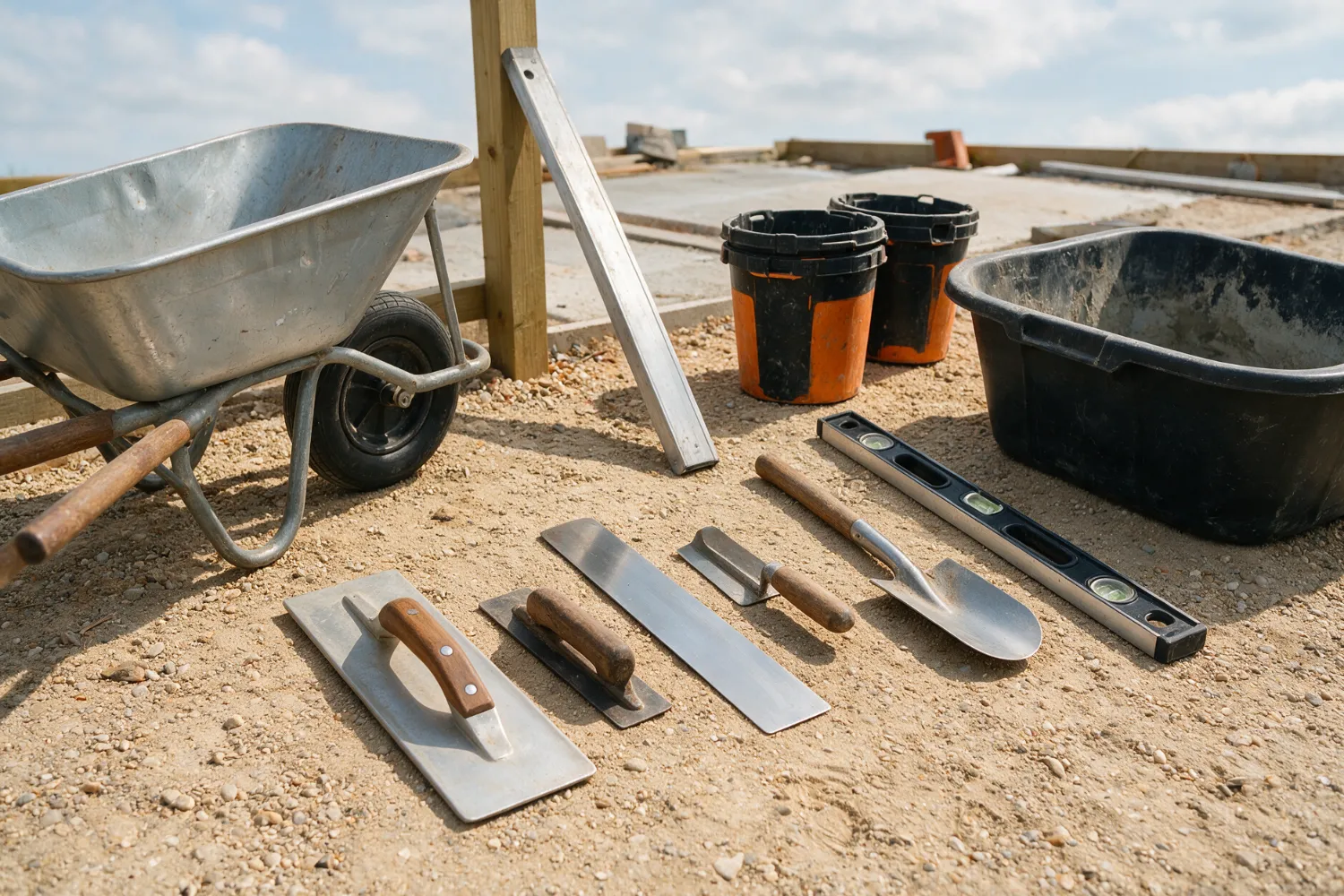
Ruling off is the process of moving a straight edge across freshly applied material to remove high areas and redistribute material into lower areas. The aim is to bring the surface to the required level, plane or fall.
On a floor screed, the straight edge may be moved across levelling rails, screed battens or other established guides. A steady sawing motion can help the edge move through the material while it is drawn towards the installer.
The process does not replace accurate setting out. Datum levels, falls and finished floor heights must be established before the screed is placed. The straight edge then helps transfer those levels across the working area.
Typical Uses for a Straight Edge
A suitable straight edge can be used for several related tasks:
- Ruling off traditional sand-and-cement floor screed
- Tamping and levelling suitable screed materials
- Checking floors and walls for high or low spots
- Levelling freshly applied plaster or render; checking the flatness of a prepared substrate
- Aligning boards, tiles or other construction elements
The precise technique depends on the material being worked and the finish required. Always follow the material manufacturer’s instructions, particularly for permitted application thicknesses, compaction and finishing.
Manual Straight Edge or Power Screed?
A manual straight edge and a power screed both help level newly placed material, but they should not be treated as the same tool.
A manual straight edge is moved by the installer. It is well suited to floor screed, plaster and render work, checking flatness and ruling off smaller or controlled areas. It requires no fuel, electrical supply or specialist powered equipment.
A power screed uses mechanical vibration or another powered action to strike off freshly poured concrete. It is generally associated with larger concrete slabs and is designed around concrete placement rather than general wall and flooring work.
The appropriate choice depends on the material, area, specification and working conditions. A product intended for sand-and-cement screed should not automatically be treated in the same way as structural concrete.
Choosing the Correct Length
Straight edges are available in different lengths because the most useful size depends on the job.
Shorter Straight Edges
Lengths around 1m to 1.5m are easier to handle in small rooms, corridors and restricted spaces. They can also be useful for local repairs and detailed wall work.
Medium Lengths
Lengths around 1.75m to 2m provide a balance between coverage and manoeuvrability. They are suitable for many general flooring, plastering and rendering applications.
Longer Straight Edges
Lengths of 2.5m or 3m cover a wider area and can help check or rule off larger surfaces. However, the working area must provide enough room to position and move the tool safely.
The straight edge should be long enough to bridge the intended guides or reference points without being unnecessarily awkward. Greater length is only beneficial when the installer can control the tool and the section remains suitably rigid.
The REFINA Heavy Duty Straight Edge available from ScreedGiant is offered in 1m, 1.5m, 1.75m, 2m, 2.5m and 3m options.
How to Use a Straight Edge for Floor Screeding
The installation method must suit the screed specification, but the general ruling-off process is:
- Establish the levels. Confirm the datum, finished floor height and any required falls before placing material.
- Prepare the substrate. Complete all required cleaning, priming, bonding or membrane work for the selected screed system.
- Set the guides. Position rails, screed pads or other suitable references at the correct height and within reach of the straight edge.
- Place and compact the screed. Add sufficient material slightly above the intended finished level and compact it as specified.
- Rule off the surface. Rest the straight edge on the guides and draw it steadily across the material. Use a controlled side-to-side action where appropriate.
- Fill low areas. Add and compact more material wherever hollows become visible, then rule the area again.
- Complete the finish. Remove temporary guides where required, fill the resulting voids and finish the surface using the appropriate hand tools.
Avoid pressing one end of the tool down more heavily than the other. Uneven pressure can introduce hollows or alter the intended level.
Checking an Existing Surface
A straight edge is also useful before work begins. Placing it across an existing floor or wall can reveal gaps beneath the edge and highlight raised sections.
Check in several positions and directions rather than relying on a single reading. Mark any significant deviations so they can be repaired, ground down or allowed for in the preparation method.
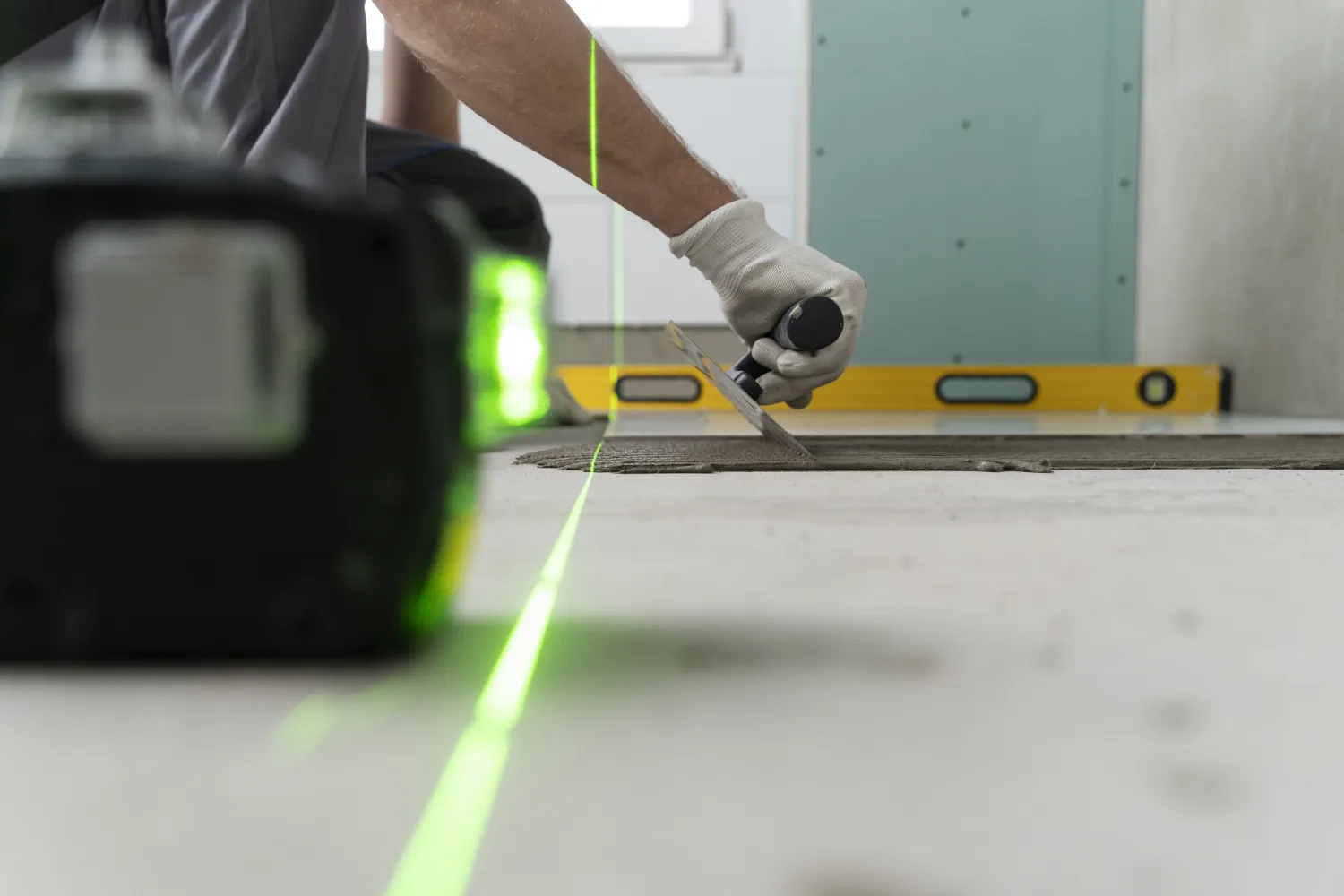
A straight edge shows variation across its own length; it does not replace a laser level, spirit level or formal survey where accurate height measurements are required.
Care and Storage
A damaged straight edge cannot provide a reliable reference. Simple care helps protect its accuracy:
- Clean off screed, plaster and render before they harden.
- Do not use the edge as a lever or support.
- Avoid dropping it or standing heavy materials on it.
- Store it flat or adequately supported to prevent bending.
- Check the working edges regularly for dents, wear and dried material.
Before an important installation, place the rule against another verified straight surface to check that it has not become distorted.
A Simple Tool That Supports an Accurate Finish
Good screeding depends on preparation, accurate levels, correct compaction and careful finishing. A rigid straight edge supports that process by giving the installer a consistent reference for ruling off and checking the surface.
Choose a length suited to the working area, protect the edge from damage and use it with properly established guides. For help selecting the right size, view the REFINA Heavy Duty Straight Edge at ScreedGiant or contact the ScreedGiant team.